

On Culture - Virtues: How They Relate to Values
I’ve spent the last couple decades studying one question: What helps us actually close the gap between who we’re capable of being and who we’re actually being?
That’s why I loved Eugene’s recent exploration of values—and his invitation to say more about virtues.
Here’s the distinction that matters most to me: Values tell us what matters. Virtues are the qualities we need to actually live those values.
And that little word actually matters.
It’s relatively easy to say we value excellence. It’s harder to practice the discipline required to pursue excellence when we’re tired, distracted, or simply don’t feel like doing what needs to be done.
It’s easy to say we value innovation. It’s harder to summon the courage to take a risk, challenge conventional wisdom, and potentially fail.
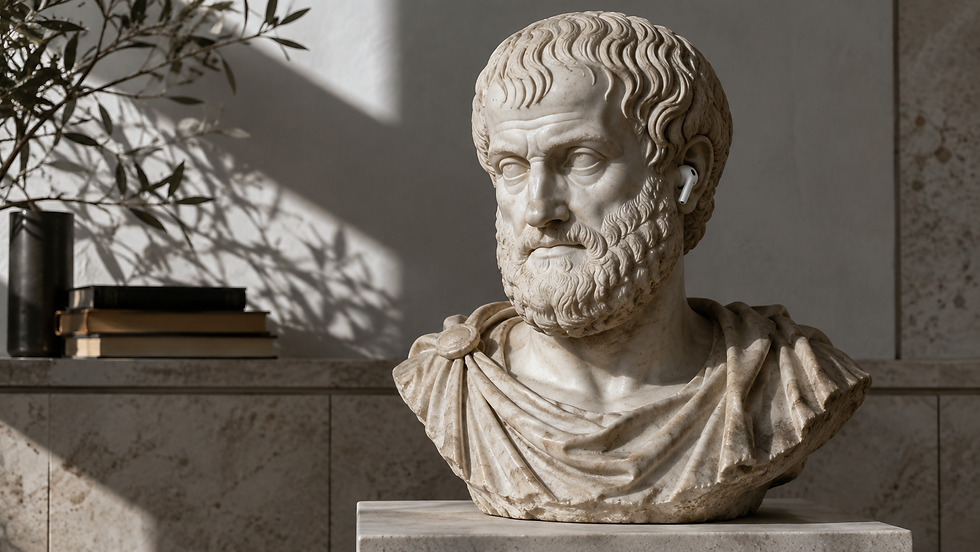
Aristotle understood this more than 2,000 years ago.
He believed the ultimate aim of life was eudaimonia—flourishing. And the path to flourishing was aretē: virtue or excellence.
But here’s the key: Virtue wasn’t something we simply believed in. It was something we practiced.
We become courageous by doing courageous things. We become disciplined by practicing discipline. Again and again. Character is forged through action.
At Heroic, we’ve modernized that ancient wisdom around four cardinal virtues:
Wisdom. Discipline. Love. Courage.
And we train them.
I’ve had the privilege of doing that work with leaders and elite performers—from CEOs and military leaders to world-class coaches and athletes. What strikes me again and again is that the highest performers don’t leave these qualities to chance. They deliberately practice doing the hard thing when it’s hard. They practice staying present under pressure. They practice having difficult conversations. Over time, those behaviors become more automatic—and ultimately become part of who they are.
That’s where I think virtue has something important to add to our conversation about organizational values.
It’s not enough to decide what matters to us and put those words on a wall.
We need to ask: What virtues must we cultivate to consistently live our values—especially when it’s hard?
Because identifying what we value is just the beginning.
The real work is becoming the kind of people capable of living those values when it matters most.
Brian Johnson
Founder, Heroic

In this Culturati: LIVE, Abilitie CEO Bjorn Billhardt, St. Edward’s University business school dean Alexis Stokes, and Hagerty VP of Learning & Development Kate Hogan explore why business judgment is becoming more essential—not less—as AI makes information, analysis, and recommendations instantly accessible. Together, they define judgment as the ability to frame the right problem, distinguish what is important from what is merely urgent, weigh competing priorities, anticipate second- and third-order consequences, and take responsibility for both a decision and its impact. As AI reduces the scarcity of knowledge and technical output, the conversation examines how business education and workplace learning must evolve from primarily transferring information to developing critical thinking, ethical reasoning, curiosity, learning agility, and moral courage.
Four Virtues That Our Leaders Need
Greater Good Magazine, Berkeley By Edward Brooks Summary: Character-based leadership strengthens both institutional performance and human flourishing. A 2023 Oxford review of 720 studies linked it to higher well-being, job satisfaction, creativity, trust, team cohesion, organizational performance, and stronger ethical climates. The most important leadership virtues are purpose, courage, love, and hope: purpose aligns strategy with meaningful goals; courage supports action under risk and uncertainty; love builds trust through genuine commitment to others; and hope keeps people oriented toward a better future when conditions are difficult. Technical competence still matters, but character determines how that competence is applied and whether leadership ultimately strengthens the people, organizations, and societies it serves. |
What Does Your Company Really Stand For?
Harvard Business Review By Paul Ingram and Yoonjin Choi Summary: Values create business value when they align three things: what employees genuinely care about, what the organization needs to execute its strategy, and the behaviors leaders reinforce. Research found that COOs with low values alignment required a 40% salary increase to be as likely to stay as highly aligned peers, underscoring the retention value of getting this right. Effective values also require more than executive selection or repeated messaging. Leaders need broad employee input, a clear connection to strategic priorities, and enough discipline to translate shared values into hiring, decisions, collaboration, and day-to-day norms. When that alignment is strong, organizations see gains in satisfaction, teamwork, communication, performance, and commitment. |
Research: What Interruptions Reveal About Company Culture
Harvard Business Review By William Degbey, Benjamin Laker, Baniyelme Zoogah, Sanjay Kumar Singh and Ghulam Murtaza Summary: Culture is reinforced in everyday interactions, especially in meetings where leaders signal whose ideas receive attention, space, and credit. In an 18-month study of 164 leaders across North America, Europe, and Asia, interruptions emerged as a consistent indicator of how authority operates inside organizations. In a follow-up study, 21 of 27 participants said they changed how they contributed after repeated interruptions, including speaking faster, waiting to be invited, or withholding ideas altogether. Leaders can improve participation by tracking who gets interrupted and what happens to their ideas, slowing fast-moving discussions, and deliberately protecting unfinished contributions. These small meeting norms shape whose thinking reaches the room and ultimately influence the quality of decisions teams make. |
Areté: Activate Your Heroic Potential
Philosopher's Notes By Brian Johnson Summary: Areté, the ancient Greek ideal of virtue or excellence, is the practice of closing the gap between who we are capable of being and how we actually show up each day. The framework combines ancient philosophy with modern science around a shared premise: flourishing comes from putting virtues into action, especially wisdom, discipline, courage, love, gratitude, hope, curiosity, and zest. Progress depends less on accumulating knowledge than consistently translating it into behavior, using everyday choices to build greater capacity, confidence, and contribution. Excellence therefore becomes a daily operating discipline: know what matters, practice it repeatedly, and keep narrowing the distance between intention and action. |
Want the full newsletter each week in your inbox? Sign up now to save time and stay on top of trends.




Comments